
 By admin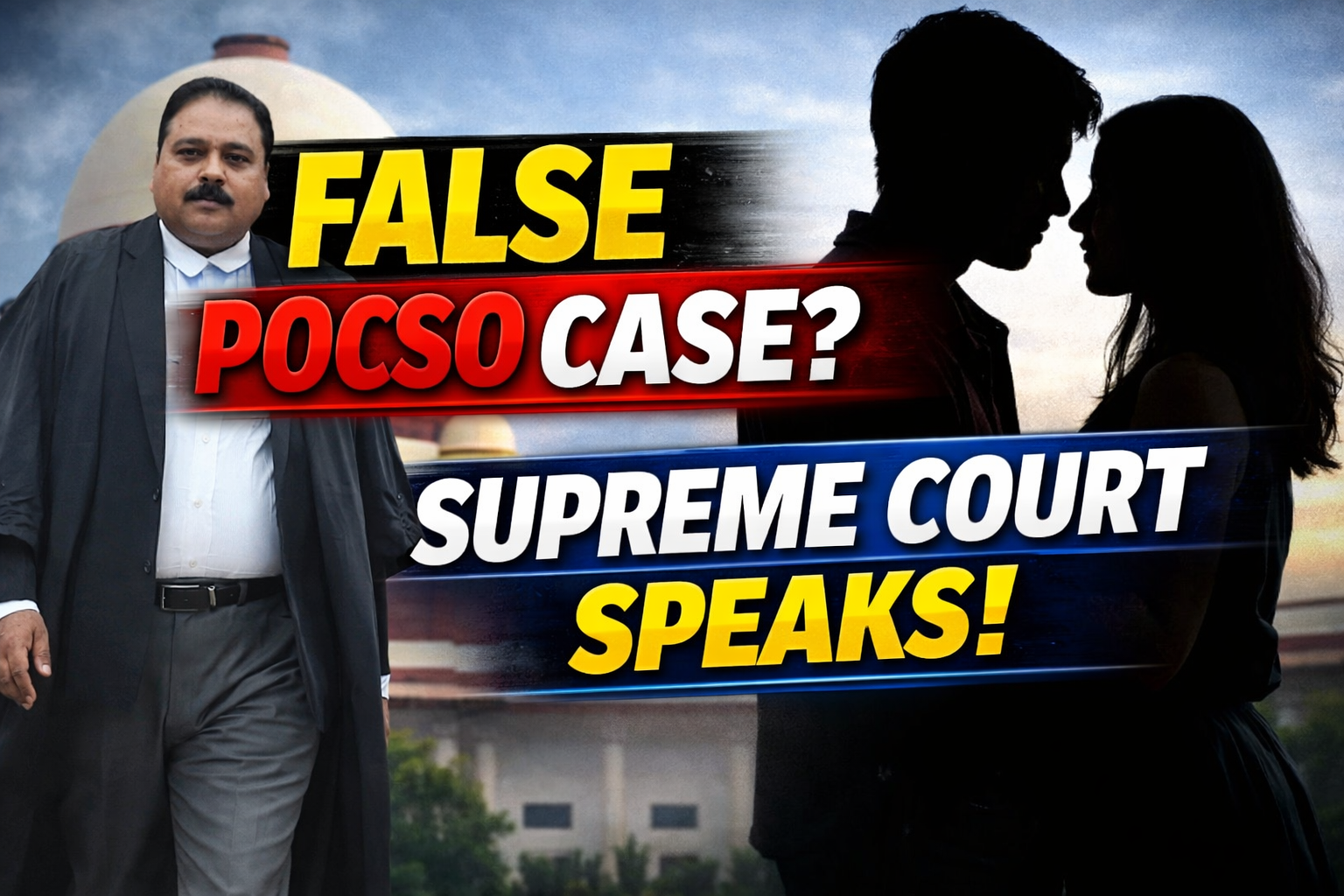
Misuse of POCSO Act? Supreme Court says, “The law cannot criminalize love!”
Misuse of POCSO Act? Supreme Court says, ‘The law cannot criminalize love!’”
Strongly appreciating this progressive and humane observation,
Dr Anthony Raju, Advocate, Supreme Court of India and a leading expert in POCSO cases, stated:
“The Hon’ble Supreme Court of India has once again upheld the true spirit of justice by recognizing that criminal law must protect children from exploitation—not be misused to punish consensual adolescent relationships.
Law is meant to safeguard innocence, not to criminalize love.
This observation is a much-needed intervention against the growing misuse of the POCSO Act and will guide courts towards a more balanced, humane, and constitutionally sound approach.”
Supreme Court Urges Centre to Introduce ‘Romeo-Juliet’ Clause in POCSO Act — Explained
What Happened?
The Supreme Court of India has recommended that the Union Government consider introducing a “Romeo-Juliet clause” in the Protection of Children from Sexual Offences Act, 2012 (POCSO Act). This recommendation came while hearing an appeal related to bail under POCSO, and the Bench expressed concern over how the law is being applied to consensual adolescent relationships.
What Is the POCSO Act?
POCSO is a child-protection law designed to safeguard children from sexual offences and abuse.
Under the Act, a “child” is anyone below 18 years. This means any sexual activity involving minors is treated as an offence, irrespective of consent.
The Problem Identified
The Supreme Court observed that while the law aims to protect children, it is sometimes being misused in cases where:
Two adolescents (both under 18)
Are in a consensual relationship
And there is only a small age gap between them
…yet are being treated as criminal perpetrators under the Act.
The Court noted that families or others often rely on POCSO to file cases not necessarily for protection, but to settle personal disputes or exert pressure, turning law enforcement into an instrument for social control.
What Is a “Romeo-Juliet Clause”?
A Romeo-Juliet clause — named after Shakespeare’s romantic couple — is a legal exception used in many countries to prevent consensual relationships between adolescents from being treated as statutory rape or criminal offences just because those involved are under the age of consent.
In simple terms:
✔️ It exempts or reduces penalty for consensual sexual activity
✔️ Only if both parties are minors
✔️ And the age difference between them is small (e.g., within 2–3 years)
✔️ And there’s no exploitation or coercion involved
Why Does This Matter Legally?
Right now, the POCSO Act treats all sexual activity involving a minor (below 18) as an offence — regardless of consent or the age gap. This means:
Two 17-year-olds in a consensual relationship could face prosecution.
No consideration is currently given to the context of the relationship.
A Romeo-Juliet clause would allow courts and lawmakers to differentiate between:
✔️ Exploitative conduct, and
✔️ Consensual, age-proximate relationships
In doing so, it limits the criminal justice system from intruding into personal choices of adolescents that do not involve abuse or exploitation.
Supreme Court’s Specific Observations
The Court highlighted that:
✔️ There has been “repeated judicial notice” of misuse of POCSO in consensual adolescent cases.
✔️ Serious systemic issues — such as lack of proper age determination — lead to wrongful criminalisation.
✔️ Parliament is the right forum to introduce such a legislative exception to better align the law with real-world adolescent behavior.
The Court directed that the judgment be sent to India’s Secretary, Law Ministry, to consider appropriate legislative steps including the Romeo-Juliet clause.
What This Does Not Change
➡️ It does not yet change the law — the Supreme Court has only suggested that Parliament consider this amendment.
➡️ Until Parliament acts, POCSO continues to apply strictly based on age.
Why This Is Important for Youth & Law
This debate touches on:
Children’s rights
Adolescent autonomy
Criminal justice reform
Protection vs. over-criminalisation
Many legal experts argue that criminal law should not interfere where there is no exploitation or harm, especially between individuals close in age — otherwise it risks punishing normal developmental behavior.
✅ In Summary
👉 The Supreme Court has flagged misuse of POCSO in consensual teen relationships.
👉 It has urged the Union Government to consider a Romeo-Juliet clause.
👉 This clause would protect consensual relationships between adolescent minors from automatic criminalisation.
👉 Parliament would need to amend the law to introduce this exception.
WhatsApp Legal Help 8588872001
Email office@humanrightscouncil.in
Legal Disclaimer
This video is created solely for legal information, educational purposes, and public awareness.
The views expressed herein do not constitute legal advice for any specific case or situation.
Facts and circumstances in POCSO and criminal cases vary from case to case.
Viewers are advised to consult a qualified advocate or legal professional for advice tailored to their individual case.
This video is not intended to influence, prejudice, or disrespect any court, authority, or individual.
#POCSOAct
#POCSOMisuse
#FalsePOCSOCase
#POCSOLaw
#POCSOCases
#POCSOSection
#RomeoJulietClause
#LoveIsNotACrime
#ConsensualRelationship
#TeenageLove
#AdolescentRights